
Not a tool your staff has to run.
We configure the workflow, operate it, and maintain it. Your people review results and make decisions. They do not inherit another console.
For single- and multi-family offices
Problems in your own office reach you late, usually from whoever happens to mention it. Our AI reads every document you already have — and decides nothing. You get back the weeks you used to spend finding out.
Your documents are never used to train models · A named person approves anything that moves money
What we will not do
We configure the workflow, operate it, and maintain it. Your people review results and make decisions. They do not inherit another console.
Each engagement is separated, logged, and grounded in the records you authorize. Your documents are never used to train models.
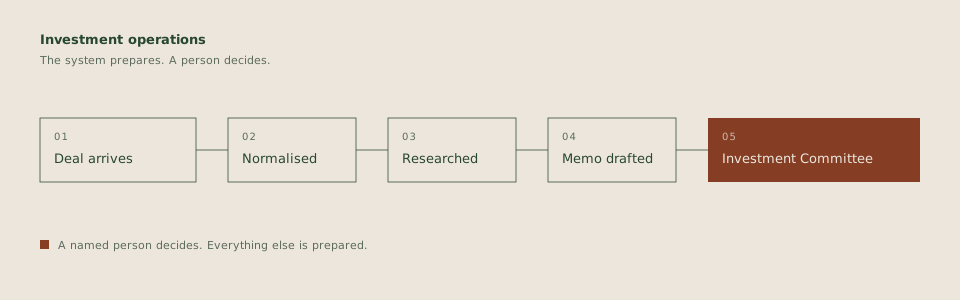
Anything touching money, privilege, or a commitment pauses. The system prepares the work. A person decides.
The work
Each engagement begins with one recurring job, adapted to your records and your controls.
Portfolio reporting, capital-call and K-1 processing, document search, diligence screening, and quarterly operating packages.
Recurring administrative work, finance workflows, vendor coordination, operational reporting, and executive briefings across business units.
Screens for changed payment instructions, look-alike domains, duplicate invoices, missing approvals, and pressure tactics.
Cited answers across agreements, policies, statements, entity records, and institutional memory that survives staff turnover.
California QME and AME practices run the same kind of operation under HIPAA and the state’s statutory clock. That work has its own page.
Proof pattern
A capital call arrives by email: $2.4M, due in four days, with updated banking details and a request to confirm same day.
The workflow extracts the terms, checks the amount against known commitments, compares the wire instructions to the details on file, and flags the change.
It does not pay. It holds the request for the controller, with a checklist that starts: call the fund on the number on file.
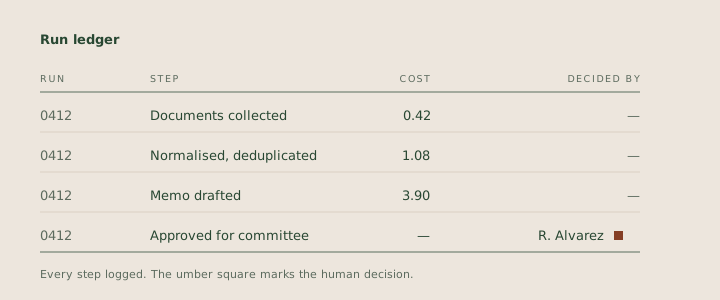
Umber marks the human decision. The accent appears only where a named person decides.
How it runs
01
We start with the repetitive jobs where the cost, delay, or dependence is already visible.
02
We run the first workflow against synthetic or limited-scope data before it touches anything consequential.
03
Your named decision-makers keep the controls they already trust. The system prepares; they approve, reject, or ask for more.
04
We operate the workflow on a flat retainer, then add the next piece of work when the first one has earned it.
Questions
No. We use software, but you buy the operated work. The platform stays in the background.
In a dedicated environment scoped to the engagement. For offices that need full separation, we can stand up an AI island on hardware they own.
A setup engagement plus a flat monthly retainer. Pricing follows the work, the entity structure, and the level of separation required.
Yes. California QME and AME practices run a version of the same practice, adapted to their own records and their own statutory clock. That work has its own page.
Private inquiry
Getting started commits you to nothing. The first walkthrough runs on synthetic data.